
Blog · September 28, 2026
When a Kansas City retaining wall starts to lean: clay, drainage, and what to fix first
Wet fall clay pushes hard on a retaining wall. Read the lean, the belly, and the weeps, and fix the water before you fix the face.
Restoration
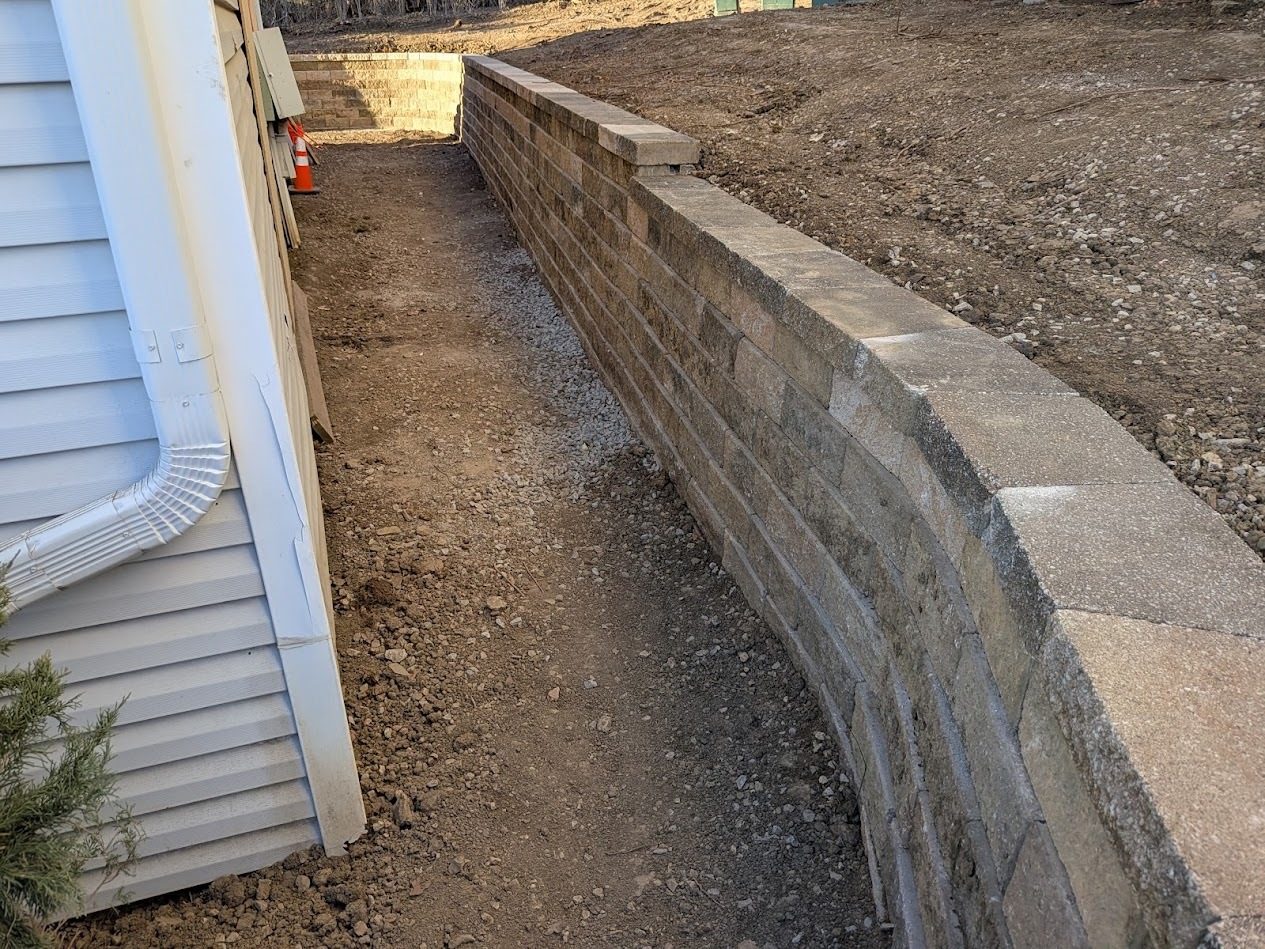
Retaining wall work by DeepFix in the KC metro.
After a stretch of autumn rain, a wall that looked fine in August can start to pitch forward or show a belly. That is KC clay, not bad luck. The soil behind the wall takes on water, swells, and pushes. If you are looking at retaining wall repair Kansas City houses need this time of year, start with the water. The face is the last thing we talk about.
We walk a lot of these walls after the first wet fall. The ones that hold can drain. The ones that lean usually have wet clay stacked against the back, with nowhere for that water to go.
Why our soil is different
Much of the ground around Kansas City is expansive clay. It holds water instead of letting it slip through. Wet clay gets heavier, and it presses sideways on the wall. That sideways load is hydrostatic pressure retaining wall clay soil puts on the back of the units: water sitting in the fill adds weight the wall was not built to carry all winter.
A dry summer hides it. The face looks quiet. Then fall rain soaks the slope, the clay swells, and the wall starts to move. A leaning retaining wall Kansas clay is pushing on is a load problem first. The units may still be sound. The soil behind them is not sitting still.
Winter adds another push. Water that is already in the backfill and in the joints freezes. Ice takes more room than water, so it jacks the wall a little on each cycle. That is frost heave retaining wall Missouri winters keep repeating — freeze, thaw, freeze again — as long as the back of the wall stays wet. We do not quote a frost depth. Footings and drains belong below the local frost line so the base is not sitting in that ice. The point is the water, not a number.
What to look for
Walk the wall after a rain, from both ends. Look at the face and at the ground behind it.
- Lean or tilt. The top is farther out than the bottom, or the whole wall is pitching toward you.
- A belly in the middle of the wall, even if the ends still look plumb.
- The wall pulling away from stairs, a slab, or the house.
- Horizontal cracks through the units or along a bed joint.
- Weeps that are clogged, buried, or missing. If you cannot find a way for water to leave, assume it is staying.
- Voids or sinkholes in the soil behind the wall. The fill is leaving.
- Water coming through the face, or a dark wet line that does not dry.
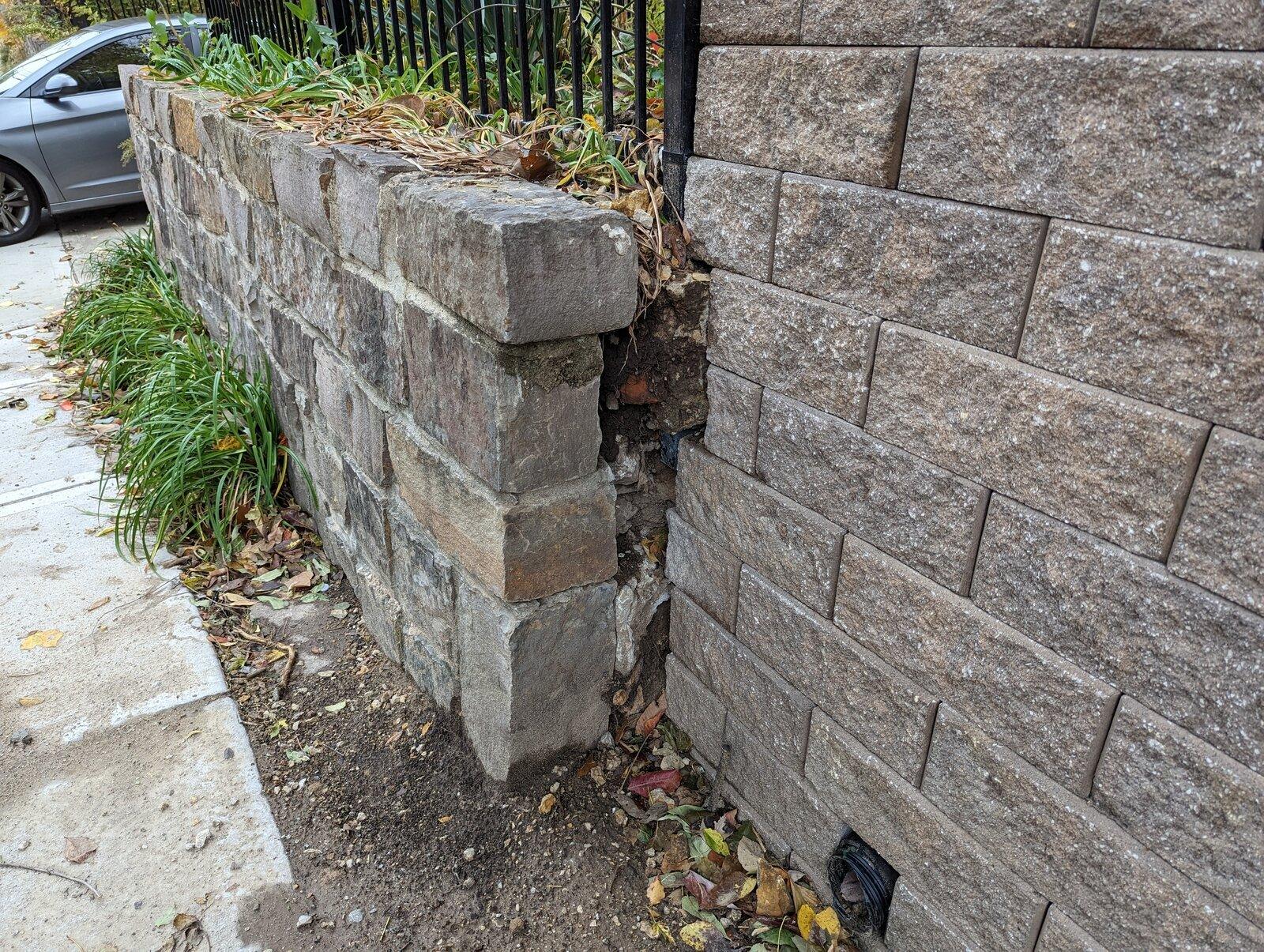
One of those can be a maintenance item. Several of them together usually mean the wall is already moving. A vertical gap where an older stone wall meets newer block is the same kind of clue. Soil showing through the joint means the two walls are no longer acting as one.
Drainage is the job
A wall that lasts needs a place for water to go that is not through the face. Clean gravel behind the units, a perforated drain at the footing, and outlets that daylight past the toe. Filter fabric keeps the clay from silting that gravel up. Without the fabric, the drain fills with mud and stops working, and you are back to a solid plug of wet soil.
Patches that ignore the water fail again. We have seen caps reset and faces pointed on walls that still had a saturated slope behind them. The face looked better for a season. The lean came back.
Downspouts are a common culprit. A gutter that dumps behind the wall, or onto the top of it, is feeding the clay. Move that water away before you spend the day on the units.
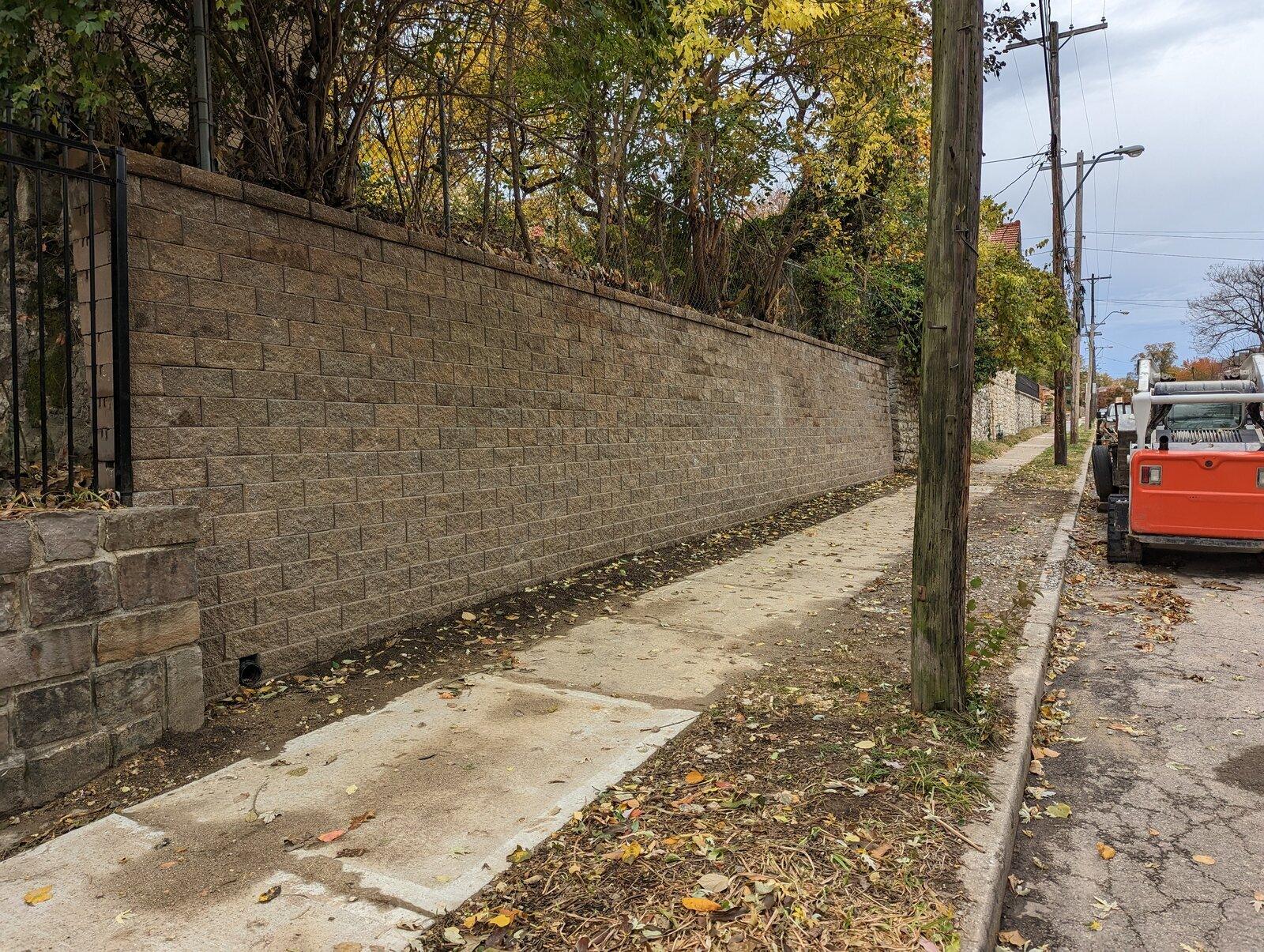
Weeps belong in the same conversation. Retaining wall drainage weep holes KC walls need are small openings or pipes at the base so water can leave instead of building pressure. If they are painted shut, buried in mulch, or never built, the wall is holding a tank. A daylighted outlet at the low end is what you want to see — water coming out of a pipe, not out of the joints.
Retaining wall repair Kansas City: repair or rebuild
Loose caps, clogged weeps, and a small settlement that has stopped moving can usually be repaired. Clean the drain, reset the cap, and point the open joints if the wall is still plumb and the toe is still in the ground.
A wall that leans past a safe batter, a toe that is sliding out, or bowing along the length is a different job. A cosmetic fix on that wall is wasted money. The honest answer is a rebuild with the drainage done right — gravel, a footing drain, outlets that daylight, and fabric so the clay stays out of the stone.
Brick retaining wall failure shows up as a lean, a stepped crack, or a cap that will not stay put after you reset it. Block retaining wall failure Kansas City homeowners describe is often a belly in the middle courses, with the ends still tight. Either way, if the wall already moved, pointing the face will not put it back. We make that same call on other brick — tuckpointing when the units are sound, a rebuild when the wall has shifted — and a retaining wall is the same judgment, with drainage added.
Timing before the freeze
Get water off the back of the wall and close open joints while the mortar can still cure. We want temperatures holding above about 40°F. Do not wait for the first hard freeze. Once the backfill is saturated and then frozen, the wall carries that load all winter. You cannot drain a frozen slope, and you cannot point a joint that is icing up at night.
The same fall window matters for the rest of the masonry on the house. A sealer is a different ticket. On a retaining wall, the work that counts before the freeze is the drain, the outlets, and the joints that are already open.
How DeepFix looks at a wall
We walk brick, block, and stone retaining walls in the KC metro. The check is plain.
- Lean and batter. Is the face still where it was built, or has it pitched?
- Toe and footing. Is the base sliding, or is it still in the ground?
- Weeps and outlets. Can water leave, and does it daylight?
- Where the water comes from. Downspouts, grade, and runoff across the top of the slope.
- Joints and caps. Loose, open, or just weathered.
- Whether the wall is still moving. A crack that is the same width as last year is not the same as one that opened after this rain.
Then we say whether it is a repair, a drainage fix, or a rebuild. No dressing it up.
Soft next step
Send a photo of the wall and the address. We will walk it. Call (816) 226-8020 or email deepfixllc@gmail.com.
Send photos. We will tell you what the wall actually needs.