
Blog · September 23, 2026
Waterproofing masonry before a Kansas City winter
Fall in the KC Metro is wet shoulders and the first freeze. Repair open joints, spalls, crowns, flashing, and gutters before any brick sealer — and only use a vapor-permeable one.
Waterproofing
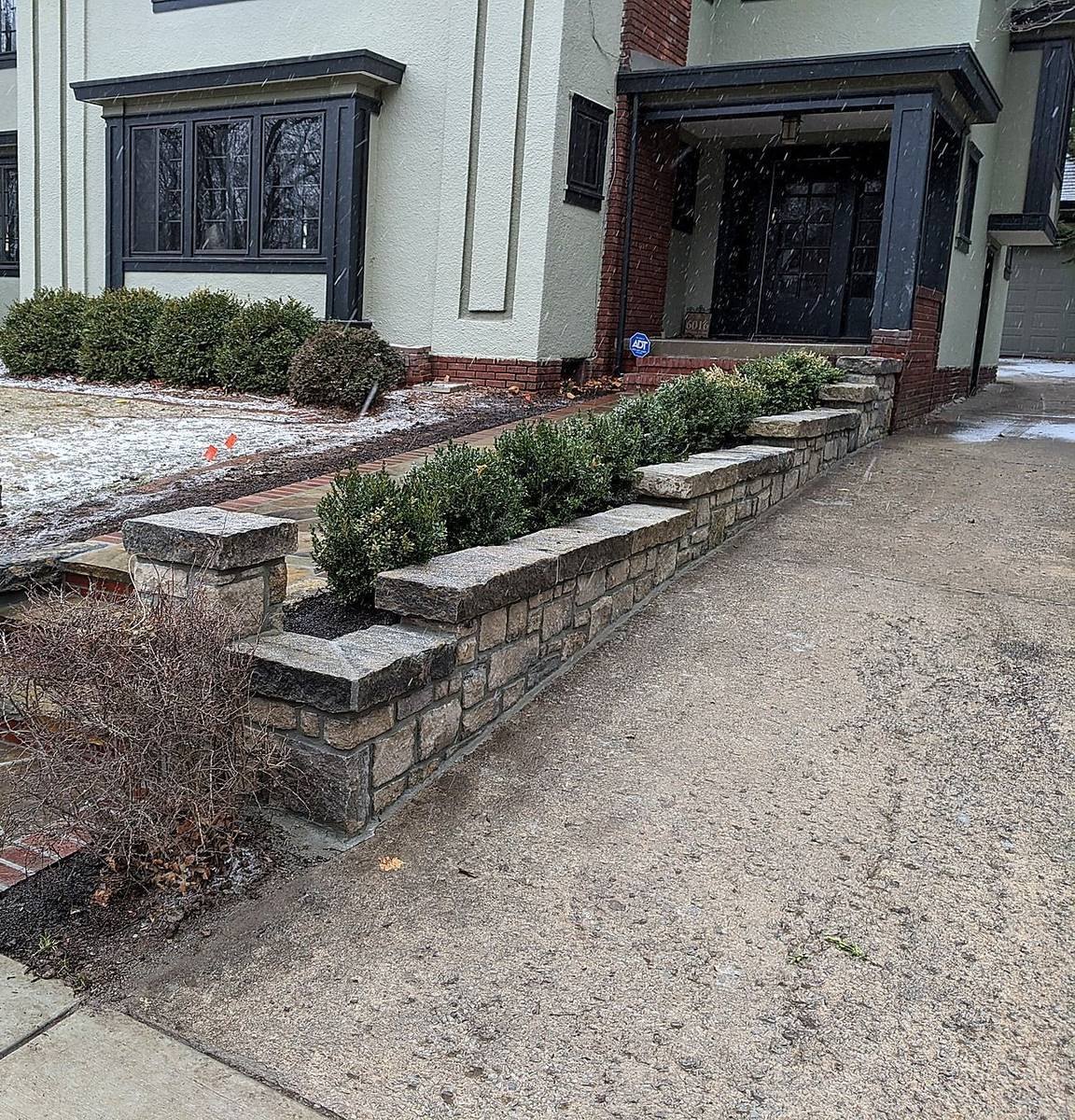
Kansas City fall does not go from summer to a hard freeze in one night. We get wet shoulders — rain, a warm afternoon, then a night that drops below freezing — and we get that cycle over and over. Water that sat in a joint in October is what pops the face off the brick in January. That is the window for masonry waterproofing Kansas City walls and stacks, and it closes once the masonry stays wet and cold.
A sealer is the last step, not the first. Most masonry water repellents need the wall around 40°F and rising, and they need a dry face. Spray one on a wet, 35-degree afternoon and it will not cure. It also will not fix an open joint.
Repair first
Waterproofing a failed wall just hides the leak. Before any coating, the assembly has to be sound:
- Open, sandy, or missing mortar joints — they are the door. Cut them out and put back a mix that matches the wall.
- Spalls — brick or stone that has already lost its face. A sealer will not put the face back. Replace the unit.
- Chimney crowns — cracked, flat, or missing. Water ponds on top of the stack and runs into the top courses.
- Flashing at the roof, sill, and porch. If it is rusted, pulled out, or just a bead of caulk on the face, water is going behind the masonry.
- Gutters and grade. A downspout that dumps on the first courses, or soil piled against the brick, keeps that wall wet no matter what you spray on it.
If the wall is leaning or bulging, stop. That is a rebuild, not a sealer. We say which one it is on the walk, before anyone buys a bucket.
Only a breathable sealer
After the repairs, the right product is a vapor permeable masonry sealer Missouri weather can live with. It sheds liquid water and still lets vapor leave the wall. A film-forming coating — paint, elastomeric, or a “waterproof” skin — traps moisture. The next freeze pushes that water through the brick face.
If you are searching for a brick sealer KC freeze thaw season, start with the joints, not the can. Silicone smeared across the face, a paint sold as masonry paint, or a hard waterproofer from the hardware aisle will look fine for a month. Then the face spalls behind the film.
Where it matters most
Not every elevation needs the same attention. The job we schedule first is chimney waterproofing before winter. The stack takes wind-driven rain on four sides, and the crown, cap, and flashing all have to work together. To waterproof chimney Kansas City houses, we look at the crown and the flashing before we talk about a coating.
The same exposure shows up on parapets and on north walls that stay wet because they never see a full sun. Those faces stay damp longer, so freeze-thaw gets more cycles. South walls dry. North walls and anything above the roof do not.
Wrong moves
- Paint the brick shut. A film on the face traps water in the wall.
- Seal a known water path. Caulk over a failed flashing or a cracked crown and the leak moves inside.
- DIY hard waterproofers. Products made to stop water dead also stop the wall from drying. Masonry has to breathe.
The order we use
- Diagnose. Where is water getting in, and is the wall still sound?
- Repair. Joints, units, crowns, flashing, gutters, and grade — the actual holes.
- Permeable waterproof. A breathable sealer, only once the face is dry and the temperature will hold.
- Maintain. Keep gutters clear, soil off the brick, and the cap on the flue. Recheck the crown after the first hard winter.
That is the same process on a chimney, a parapet, or a wet north wall: walk the job, take out the failure, rebuild it once, weather it in.
Soft next step
DeepFix serves the Kansas City metro and surrounding areas. The wall and chimney walk is free. Call (816) 226-8020 and send a few photos of the joints, the crown, and anywhere water stains the ceiling. We will tell you whether this fall is a repair, a breathable sealer, or both — and we will give you a straight number before the first hard freeze.