
Blog · September 21, 2026
White powder on your brick: what efflorescence means before a Kansas City winter
White powder on brick is usually salt left by water — not dirt. Here’s what it means for KC walls before freeze-thaw, and what to fix first.
Restoration
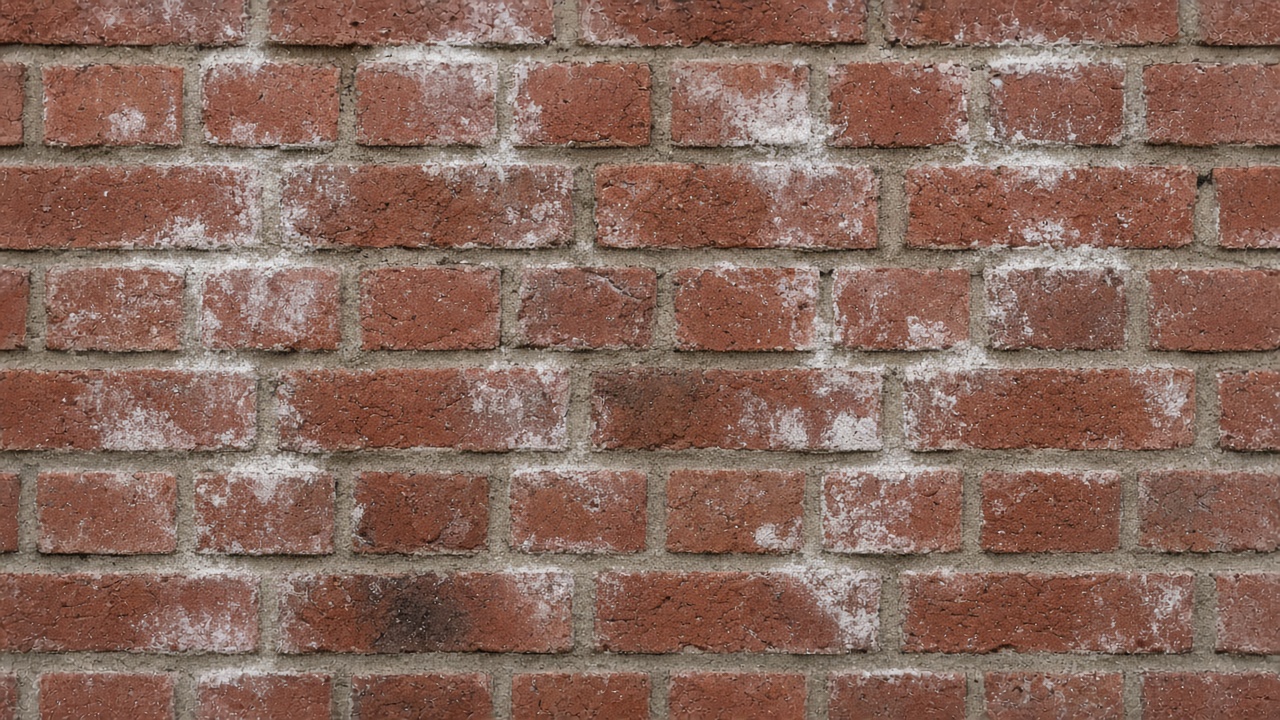
That chalky white film on your brick is not dust from the street. It is usually salt. Water moves through the wall, dissolves minerals in the brick and mortar, then evaporates at the face and leaves the salt behind. Masons call it efflorescence. Homeowners just call it the white powder that will not wipe off for good.
In the KC Metro, this shows up a lot after a wet stretch — and it matters more in the fall. Once nighttime temperatures start crossing freezing, the same water path that left the stain can start breaking the face of the brick.
What the white powder is telling you
Efflorescence itself is mostly a symptom. The salt is not eating the wall. The water that carried it is the problem.
A one-time bloom after new work or a hard rain can dry out and stay quiet. Recurring white residue on the same elevation, chimney, or foundation wall means moisture still has a path in. Common paths we see around Lee’s Summit and the greater metro:
- Recessed or sandy brick mortar joints that pull water into the assembly
- Failed flashing at a roof, sill, or chimney
- A cracked crown or open cap letting water into the stack
- Grade and gutters dumping runoff against the base of the wall
- A coating or caulk job that traps moisture instead of letting the masonry breathe
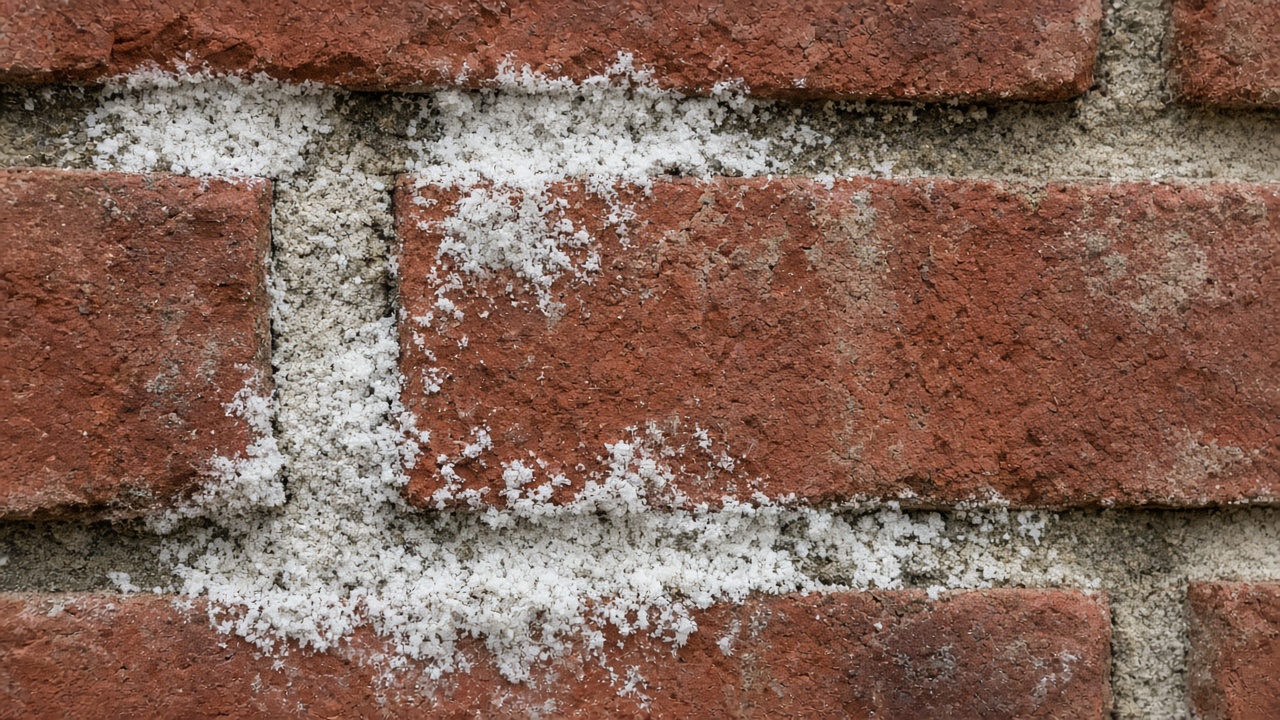
If the powder tracks along a single joint line, that joint is often the channel. If it fans across a whole face after every storm, look higher — roof edge, window head, planter against the brick, or a porch that holds water.
Why fall is the wrong time to ignore it
Missouri weather does not freeze once and stay frozen. We get repeated freeze-thaw cycles. Water in the pores expands when it freezes. That pressure pushes salts to the surface — and, over enough cycles, it can pop the face off the brick (spalling) or open the joint further.
Cleaning the white film without fixing the water path is a temporary win. The salts come back. Worse, aggressive washing or the wrong acid can etch soft historic brick and leave the wall more open than before. If you dry-brush a light deposit, fine. If it returns, stop scrubbing and find the leak.
What we check on a DeepFix walk
We do not start with a bottle of cleaner. We walk the elevation the same way we walk any masonry job:
- Where is water entering?
- Are the units still sound, or is the face already gone?
- Are the joints the failure — or has the wall moved?
- Does the assembly have a way for water to get out (flashing, weep, drainage), or only a way in?
Sometimes the answer is tuckpointing the failed joints with a mix that matches the wall. Sometimes it is rebuilding a wet, rotten section once instead of grinding forever. Sometimes the masonry is fine and the roof edge or grade is the ticket. Waterproofing — breathable coatings, flashings, crowns — only makes sense after the entry points are honest. Seal over a leaking joint and you can push moisture deeper into the wall.
That sequence is the same process we use on stoops, chimneys, veneer, and block: walk the job, take out the failure, rebuild it once, weather it in.
What you can do this week
Before the first hard freeze:
- Walk your brick elevations after a rain. Note where water sits and where white residue returns.
- Look at mortar joints at eye level. Soft, sandy, or missing joints are open doors.
- Check chimney crowns, caps, and step flashing from the ground (binoculars help). Interior ceiling stains near the fireplace are a moisture flag.
- Keep soil and mulch off the first courses of brick. Clear gutters that dump against the house.
- Skip film-forming paint or silicone smeared across brick faces as a “fix.” Wrong materials trap water.
If the wall is leaning, bulging, or losing brick faces in sheets, that is past a salt problem. Send photos. We will tell you whether the repair is joints, units, drainage, or a rebuild.
Soft next step
DeepFix serves Lee’s Summit and the greater Kansas City metro — brick, block, stone, joint repair, and masonry waterproofing treated as part of the assembly, not an afterthought. The on-site visit is free. Call (816) 226-8020 or email deepfixllc@gmail.com with photos of the white residue and the joints around it. We will read the water path and give you a straight number for the work that actually lasts past winter.