
Blog · October 5, 2026
Crack Chimney Crown Before Kansas City Winter: What to Fix First
A cracked crown and open joints let water into KC chimney masonry before freeze-thaw. Here's how we call crown, tuckpointing, flashing, and rebuild — and why fall is the window.
Restoration
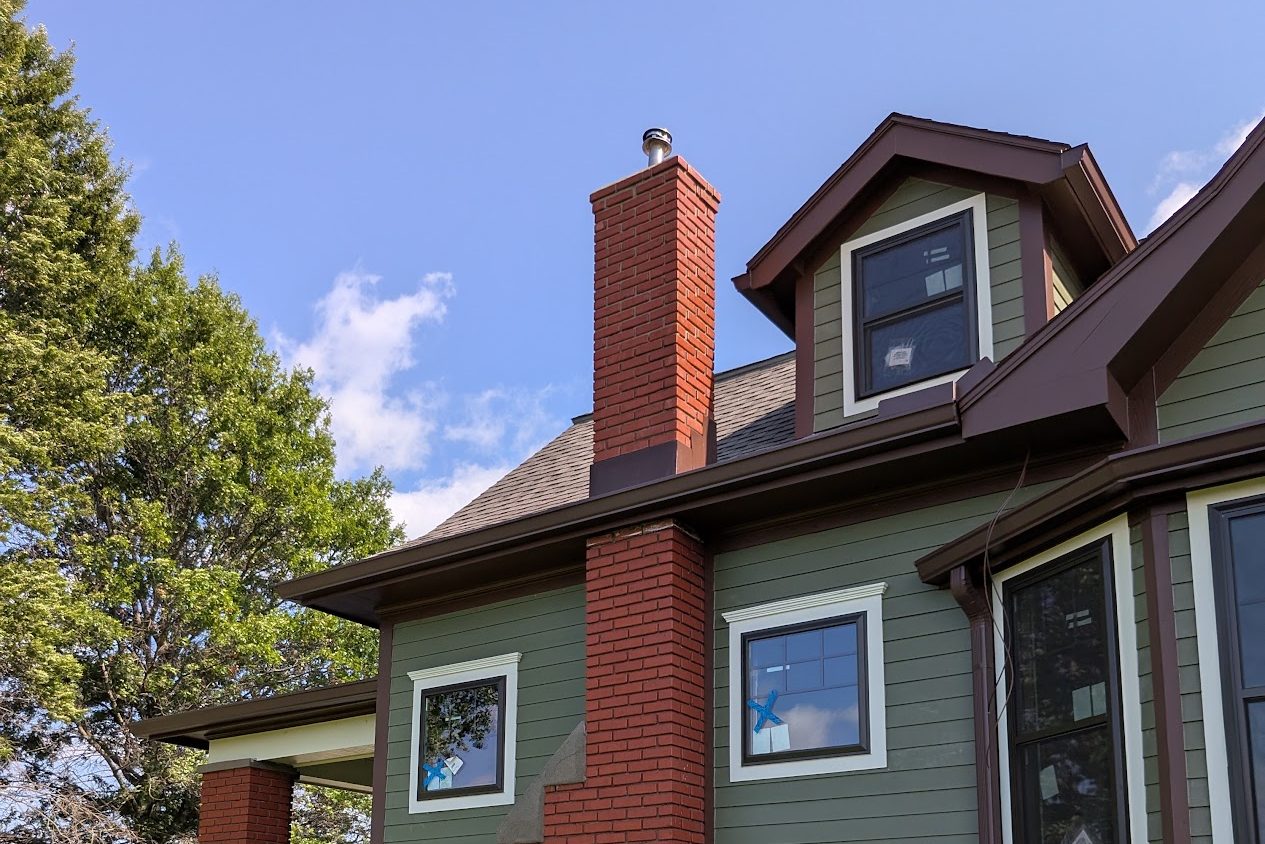
Chimney crown (masonry lid) and metal cap over the flue — two different parts. DeepFix photo.
Fall is when the chimney calls start. Water stains near fireplace after rain, or mortar gone from the top of the stack, are what people notice from the living room and the yard. The first fix people reach for is a tube of caulk, or a coating sold as a sealer. A sweep may talk about a cap and a liner. Those parts can belong on a chimney. They are not the first masonry question.
If you are looking at chimney crown repair Kansas City houses need before a hard freeze, start with the water path. A cracked crown and open joints let water into the brick. We call the crown, the flashing, the joints, and a rebuild in that order. Face work waits until the water is under control.
Chimney crown vs cap
The crown and the cap do different jobs. Mixing them up is how a small leak gets the wrong repair.
The crown is the masonry or concrete lid on top of the stack. It should slope, and it should close the space around the flue so rain does not sit on the brick. A cap is the metal rain hood over the flue opening. It keeps rain and animals out of the flue. It does not cover the brick, and it does not replace the lid.
Flashing is the third piece. Chimney flashing Kansas City roofs need is the metal where the stack comes through the shingles. An open or rusted joint there lets water in at the roof even when the crown looks quiet from the yard.
A thin mortar wash can look like a crown until it cracks. Guidance written for masonry chimneys is plain about that wash: too thin, and it cracks, lets water in, and can push the face off the brick below. A crown that lasts is thicker. It slopes away from the flue. It sheds water off the faces of the brick, not back onto them. That is the shape we look for when we are on the roof. Hairline cracks that start at the flue and run to the edge are the ones that matter. A crown that has pulled away from the flue, or that ponds water in the middle, is not shedding.
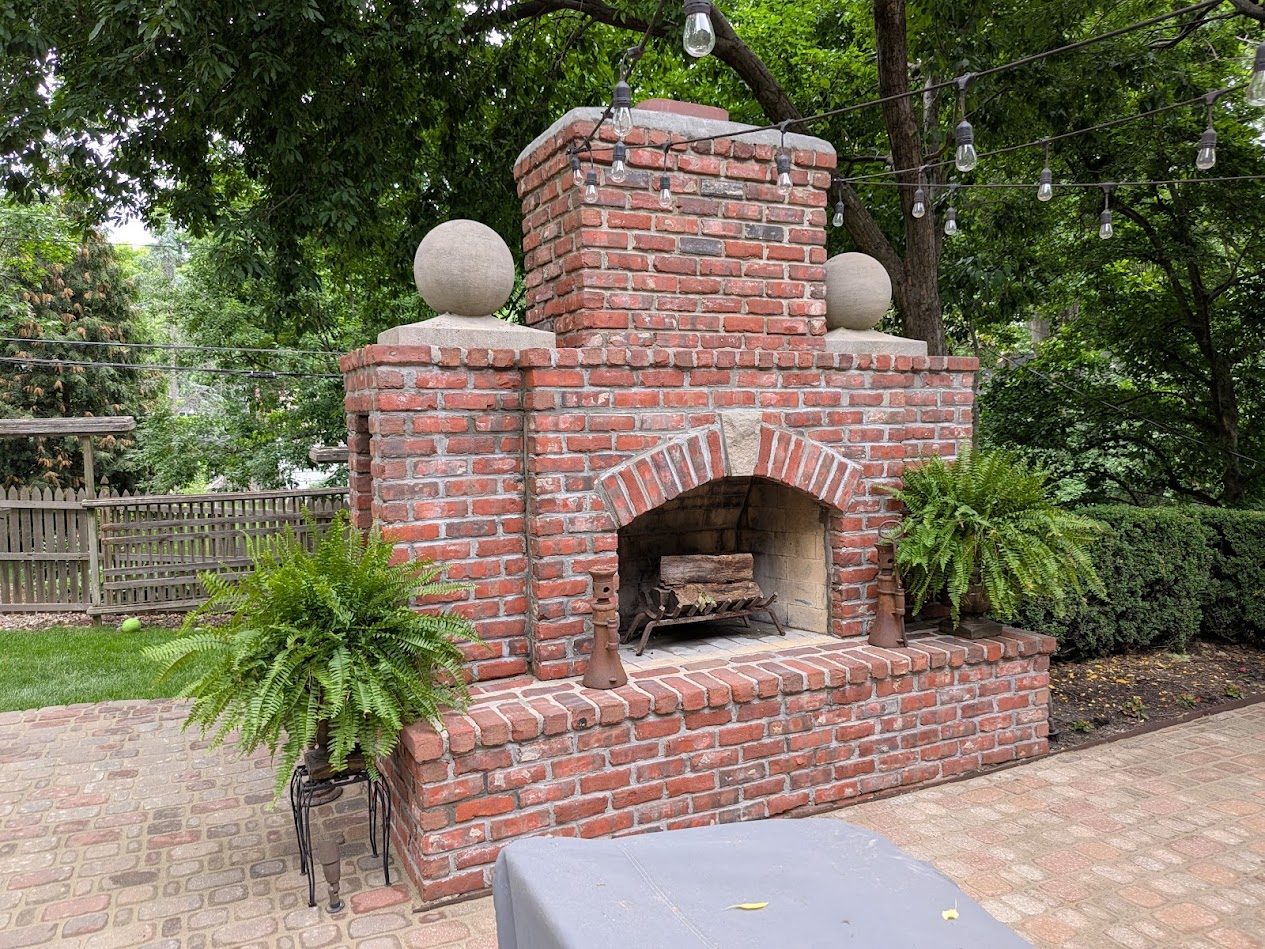
How freeze-thaw uses a hairline
A chimney crown crack does not have to be wide to matter. Water finds the hairline and sits there. On a Kansas City night that water freezes. By afternoon it thaws. Ice takes more room than water, so the crack opens a little. The next rain goes deeper. That is a freeze-thaw chimney crown. The brick and the mortar under the lid stay wet, then they take the same cycle.
Kansas City sits in a high freeze-thaw band — about 70 or more air freeze-thaw cycles a year in published city indexes. We do not use that as a scare line. It is why a small crack in October can be a leak path, and a set of open joints, by spring. The stack does not get one freeze and stay frozen. It gets wet, then cold, then warm, then wet again. Caulk smeared into the crack lasts until the next cycle moves the crown. Then the caulk splits, and the water is back.
What you can see from the ground
You do not have to get on the roof to start the list. Walk the house after a rain. Look up, then look inside.
- Interior stains or damp plaster near the fireplace or the chimney breast. That pattern is often chimney leaking when it rains, not a mystery drip in the ceiling.
- White salts on the outside of the stack, or brick that stays dark after the rest of the house has dried.
- Missing, sandy, or recessed mortar in the top courses. Binoculars help. Missing mortar top of chimney is a water path even when the crown itself is hard to see.
- Rust streaks, or a gap you can see, where the chimney meets the roof. That is the flashing telling on itself.
- Water dripping into the firebox, or down inside the chase, after a storm.
Photograph the stack from the yard and from an upstairs window before anyone goes on the roof. Include the top courses if you can see them, and the ceiling or the wall next to the fireplace if it is stained. Those pictures are enough for us to say whether the next step is a closer look at the crown.
Chimney crown repair Kansas City: water first
The order is the water, then the masonry under it. A cracked chimney crown before winter is a lid problem. Repair or replace the crown so the top sheds water. Then check the flashing and the roof junction. Joints lower on the stack come after that. Point a wet chimney and leave the crown open, and the new joints take the same water the old ones did.
Open joints, spalled brick, or a top that leans or has already shifted is a different call. Tuckpointing fits when the units are still sound and the stack is still plumb. A rebuild fits when the masonry has moved. We use that same line on walls. A chimney is the same judgment, with the crown and the flashing in front of the joints. How we call tuckpointing or a rebuild is the longer note on that call.
A coating is not a crown. Film-forming paint, or a hard sealer smeared over a crack, traps water in the brick. It is not a stand-in for a lid that slopes and sheds. Masonry chimney repair Kansas City stacks need starts at the top: crown, then flashing, then the joints. Breathable waterproofing, if it belongs at all, comes after the openings are honest. The fall note on that timing is waterproofing masonry before a Kansas City winter. We do not spray a sealer and call the crown done.
When the roof is not your job
Crown work and flashing work are roof work. The pitch is steep. Wet shingles are slick. You are standing next to a flue. Guidance written for masonry chimneys puts this repair with people who do the work, and it warns against the thin mortar wash that cracks and spalls the brick. You do not need to climb to get an answer started. Photos from the ground, and a phone call, are enough for us to tell you what we need to see.
Soft next step
Send ground-level photos of the stack, the top courses, and any stains inside. Call (816) 226-8020 or email deepfixllc@gmail.com. We will tell you whether the crown, the flashing, tuckpointing, or a rebuild comes first.
Send photos. We will tell you what the chimney actually needs.