
Blog · October 27, 2026
Rusty railings and rust stains on Kansas City steps: clean the iron, save the stone
Rust swells where iron meets stone and brick, cracking steps and streaking the face. Here's how to read it, what the cleaning options are, and the order to fix it before winter.
Laser cleaning
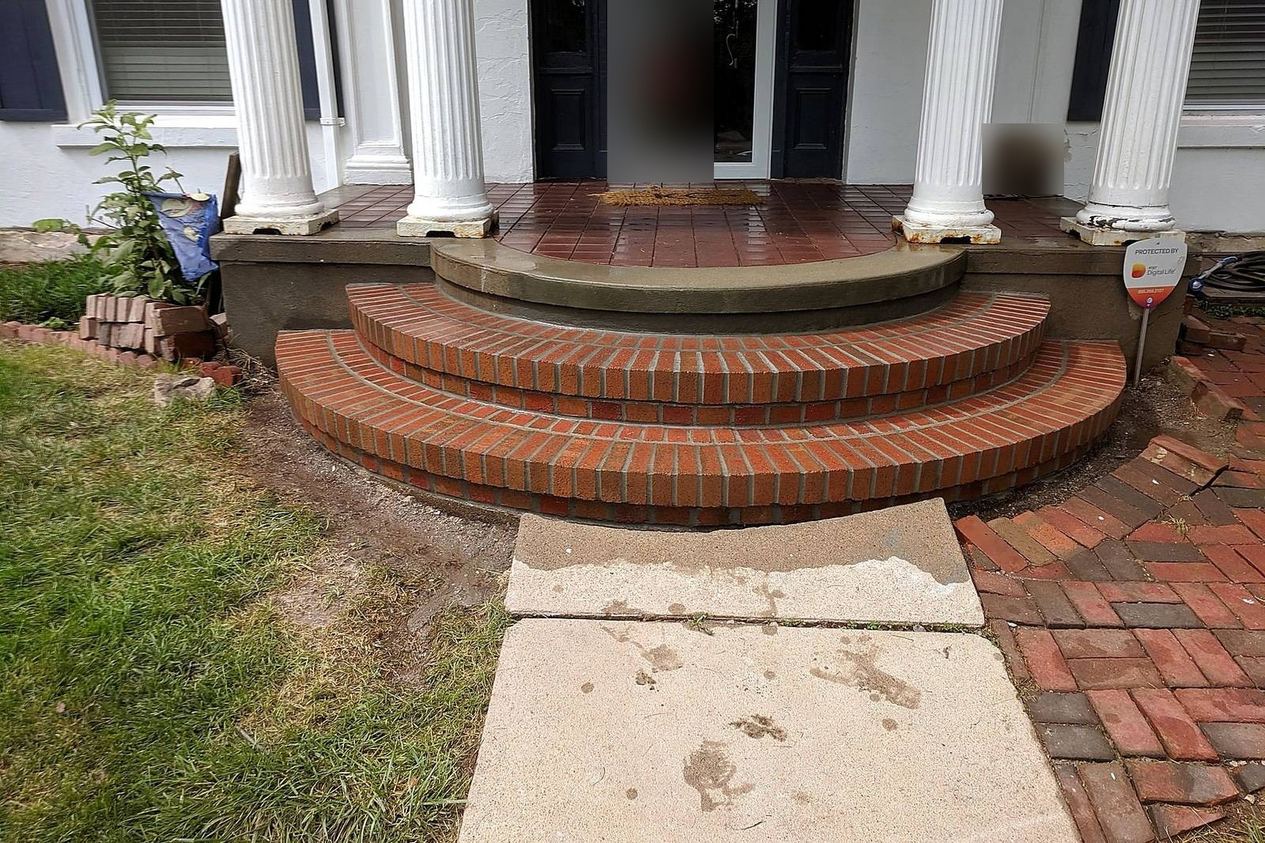
Rust-stained column bases on a Liberty porch where we rebuilt the half-round brick steps.
Late fall is when people pick up a brush and deal with the porch railing before snow and salt. Rust on that iron does not stay in the iron. Where a post or a column base sits in stone or brick, it works on the step too. If you are looking at rusty railing repair Kansas City porches need before winter, start at the hole the post sits in, not at the paint can.
Rust grows
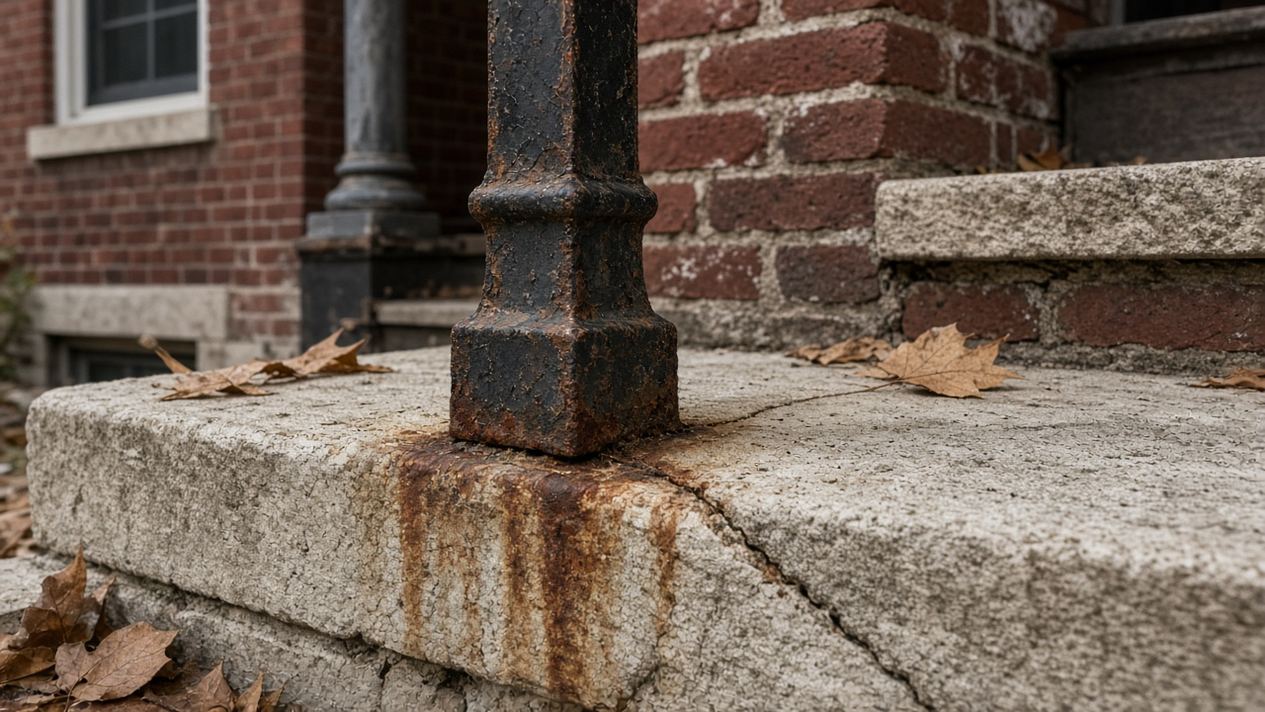
Iron oxide takes up far more room than the iron it came from. Published foundry notes put that swell at about seven times the volume. Where a post is set in stone or brick, that growth is rust jacking masonry. The step or the cap splits. Orange streaks run down the face. A wrought iron railing post cracked step is usually this, not a mystery crack from the yard.
Cement mortar packed around the post makes it worse. It looks tight the day it is installed. It traps water against the iron. The iron stays wet, the rust keeps swelling, and the masonry takes the push. A post reset in a hard plug will open the same crack again.
A 10-minute check
Walk the railing on a dry day. Look at the metal, then at the masonry it sits in. You are reading the joint between the two.
- A post that wobbles when you lean on it. The pocket has opened.
- A crack that starts at the post hole and runs across the tread or the cap.
- Orange streaks running down from the base. Those are rust stains on brick steps, or the same stain on a limestone tread.
- Paint that is flaking, or a base that is bubbling. The iron under it is already wet.
- A column base plate with a rust halo on the step, even when the column above still looks white.
Why grinders and wire wheels fall short
A grinder or a wire wheel clears the flat bar. It misses the scrolls, the pits, and the back of a post where it meets the step. It can also take sound metal with the rust. What is left is thinner iron and a surface that rusts again as soon as it is wet.
On the masonry, an abrasive scrub or a harsh acid is the wrong next move. National Park Service Preservation Brief 6 warns that abrasive cleaning scars masonry. Limestone and other soft stone etch. That is why the job to remove rust stains from limestone is careful, not a scrub. You can lighten a surface stain and still leave a scar that reads louder than the streak.
Where a laser fits
Laser rust removal railing work uses a different tool. A pulsed fiber laser lifts rust and old paint without touching the iron. It can reach a scroll and a recess a wheel cannot. It can often be done with the railing still in place. Bare iron has to be primed right away, or the rust starts again the next time it rains.
Technical notes on laser cleaning say the work is selective and leaves little waste. They also say it is slow, it is not for washing a whole facade, and it does not reach a stain that has already soaked under the surface. A deep rust stain in stone may only lighten. Park Service guidance on this kind of cleaning wants a trained operator and a test patch before anyone commits to the face.
The longer note on what that cleaning is for, and what it is not, is laser cleaning: soot and stain off, masonry left alone.
Lead paint first
Many older railings carry lead paint. The EPA's Renovation, Repair and Painting rule requires a certified firm for paid work that disturbs paint in homes built before 1978. The exterior exception is small: 20 square feet or less of disturbed exterior paint for the whole job. Above that, the rule applies, and the work has to be contained.
Testing comes first, before anyone strips, sands, grinds, or lasers old paint. Before lead paint on a railing is disturbed, confirm the contractor's EPA RRP certification, for example with the EPA's online firm lookup. That check belongs to the paint work. It is not a masonry detail.
Rusty railing repair Kansas City: water first
Stop the water before you chase the stain. A base that stays wet will rust again no matter how clean the iron looks today. Move the splash. Give the post a way to shed, not a cup that holds the next rain.
Then the iron. Clean it and prime it. If the paint may contain lead, that work belongs with a qualified contractor who holds the certification the job requires. Repair the cracked step or cap after the iron is honest, not before. Reset the post so the detail sheds water instead of packing it against the metal. Then repoint.
Salt and freeze on the treads are the same winter problem written up in brick steps and stoops before a Kansas City winter. How we call tuckpointing or a rebuild is the line between pointing a sound step and taking out a step that has already moved. We say which one it is before the first joint is cut.
Soft next step
Text photos of the post base and the step to (816) 226-8020, or email deepfixllc@gmail.com. We will tell you what fits, and we will add you to the laser interest list. We do cold-weather masonry, so a step or a cap can still be repaired on a mild day after it turns cold.
Send the photos. We will tell you what the iron is doing to the step.