
Blog · November 2, 2026
Spalling brick in Kansas City: why the face pops off, and why paint or sealer makes it worse
When the face of a brick pops off, the water got in first. Here's what spalling is, why paint and sealer usually make it worse, and the order to fix it before the next freeze.
Restoration
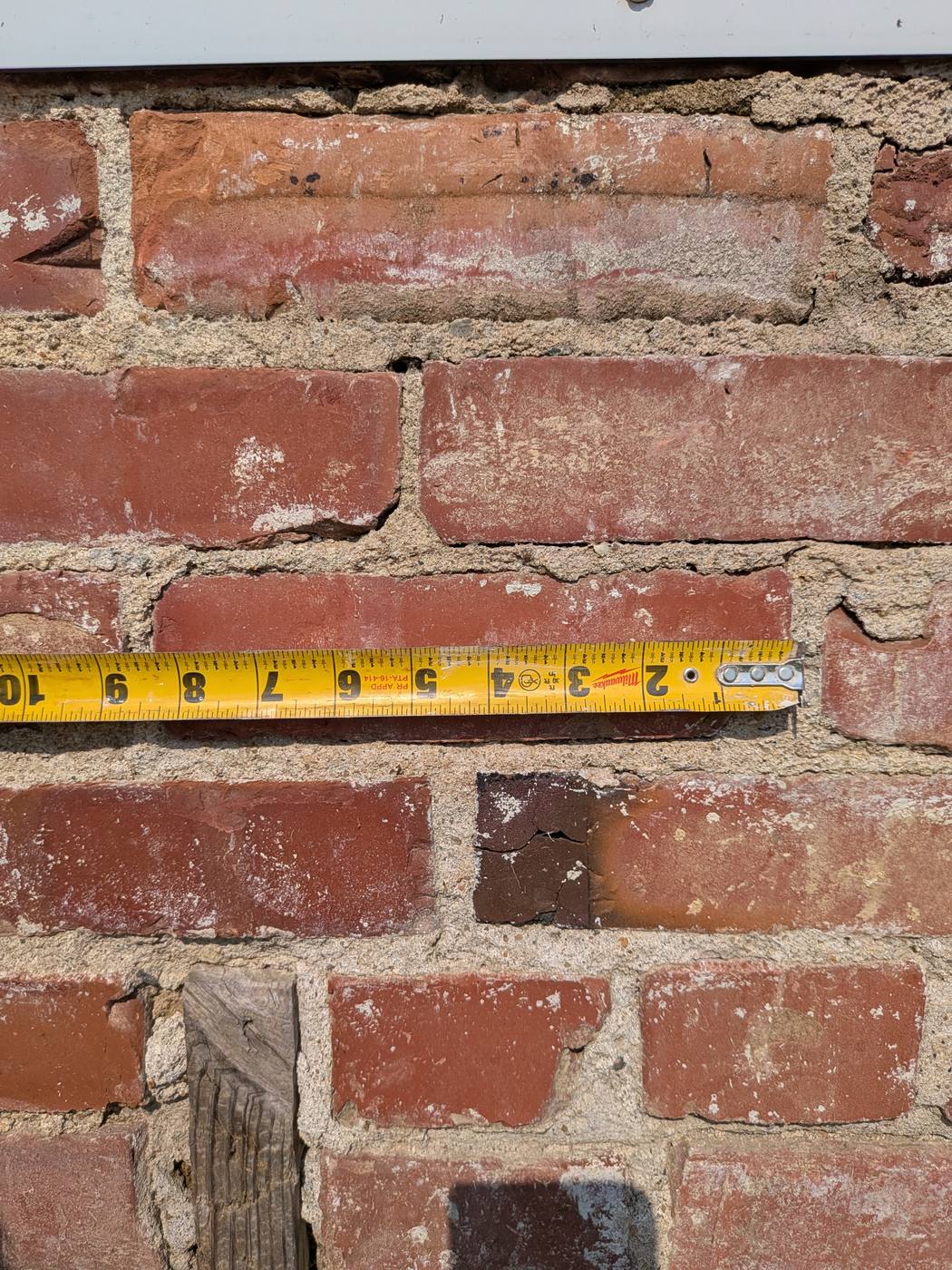
Spalled brick faces and worn mortar on an older east-metro wall we assessed.
The face of a brick is supposed to stay on the brick. When it flakes, peels, or pops off, that is spalling. Homeowners usually notice it as brick flaking off house walls, or a brick face popping off in a sheet under a window or on a chimney. If you are looking at spalling brick Kansas City houses show after a wet fall, the water got in first. Paint and sealer usually come later. They often make the next winter worse.
What spalling is
Water soaks the unit. When that water freezes, it expands about 9 percent and pushes from the inside. Salts that ride in with the water crystallize just under the face and push the same way. National Park Service Preservation Brief 2 describes both. The skin of the brick shears off. What is left is a rough, softer core. That core takes on more water the next rain, so the damage does not stop at one flake.
A chimney gets this first. The stack has weather on four sides, and nothing overhangs the top courses. Spalling chimney brick can show up while the walls still look quiet. The water is coming from the crown, the cap, or the flashing, not from the brick simply being old.
Where it starts on a KC house
It rarely starts in the middle of a sound wall. Walk the elevations after a rain. Look for where the water sits, not only where the face is already gone.
- Under a cracked crown or failed flashing. Water runs into the top of the stack and into the first courses under the roof.
- Below a downspout or a hose bib that dumps on the brick and never gets a chance to dry.
- At grade, where mulch or soil sits against the wall and keeps the bottom courses wet.
- Next to old cement patches. Those hard plugs stay put. The brick beside them gives up its face.
The chimney version of that water path is the note on a cracked chimney crown before a Kansas City winter.
Should I seal spalling brick
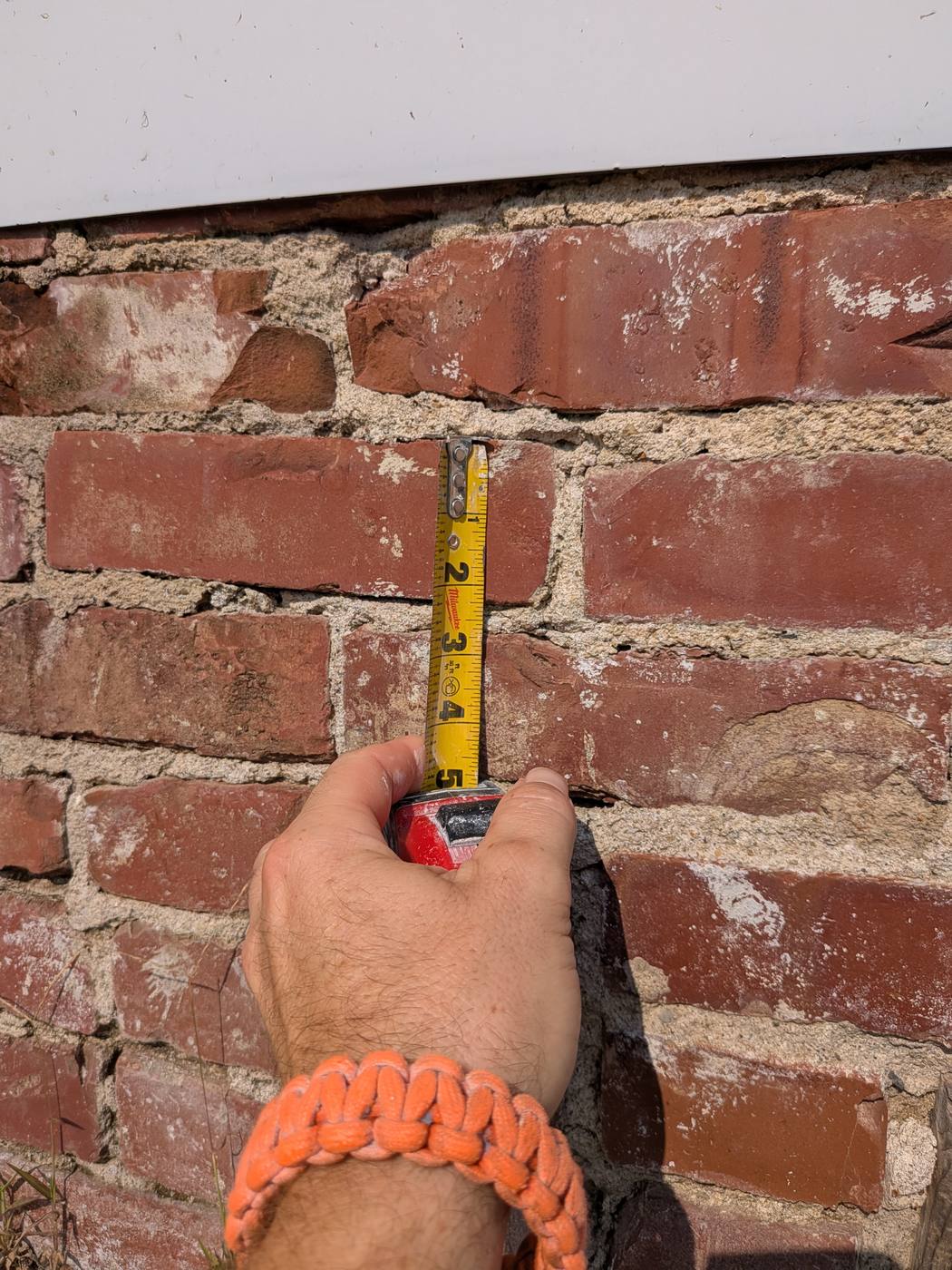
The short answer is no, not while the wall is damp and the joints are open. Preservation Brief 1 is plain about water-repellent coatings. They should not go on a damp wall, and they can hold moisture in. The water problem is usually a leak, a gutter, or an open joint. It is not the fact that brick is porous.
A film on a wall that is already shedding faces traps the next rain. The freeze has nowhere to go but out through the brick. More faces leave. The coating is still there, peeling, and it looks like the product failed. The wall never got a chance to dry.
The fall note on the right order is waterproofing masonry before a Kansas City winter. Repair the leaks and the joints first. If a water repellent belongs at all, it is vapor-permeable, and it goes on after the wall can dry. We do not coat a wet wall and call it protected.
Painting brick causes spalling
Paint and a parge coat on brick that was never meant to be coated do the same job as a bad sealer. They look like a cover. They slow the drying. Peeling paint over flaking brick is not a finish that needs another coat. It is a sign the water is stuck behind the film. Scraping it and painting again does not put the face back on the unit.
If the brick was painted decades ago and that paint is still sound, leave the question for the walk. New paint on brick that is already popping is the move that speeds the loss. The film stays. The face does not.
Harder mortar is not stronger
A harder joint is not a stronger wall. Preservation Brief 2 says the mortar you put back has to be softer and more permeable than the brick. Hard portland-cement mortar stays rigid. Freeze and movement go into the brick instead of the joint. The faces pop. The joint stays gray and proud of the wall.
That is hard mortar damaging brick, and it is the repair we undo most often on older walls in the metro. Matched mortar on old Kansas City brick is how the new joint, the sand, and the profile belong to the wall that is already there. Matching is not a color extra. It is how the brick keeps its face.
Spalling brick Kansas City: stop the water first
Stop the water before you talk about units. A cracked crown, failed flashing, a gutter that dumps on the wall, soil piled on the first courses: those keep the brick wet no matter which unit you set. Move the water. Then cut out the failed joints and repoint with mortar softer than the brick.
Replace only the units that have failed. To replace spalled brick, use a matched, weather-rated brick so the patch does not read from the sidewalk. A thin face glued over the soft core is a last resort, and only when no match exists. It is not where we start. A face patch on a wall that is still wet will leave with the next freeze.
Widespread spalling, a bulge, or brick that has come loose is a different call. How we call tuckpointing or a rebuild is the line between pointing a sound wall and taking out masonry that has already moved. We say which one it is on the walk, before the first brick comes out.
What winter actually allows
We can look at a wall any month of the year. The reading does not wait on the weather. Exterior mortar work below about 40°F needs protection from the cold, or the joint does not cure the way it should. We do cold-weather masonry, so a mild day can still be a repair day after it turns cold. We will not name a date. We will tell you whether the wall can wait, or whether the water path should be closed before the next hard freeze.
Soft next step
Text photos of the flaking area, and of whatever sits above it, to (816) 226-8020, or email deepfixllc@gmail.com. The crown, the gutter, the grade, and the joints all belong in the same set of pictures.
Send the photos. We will tell you whether this is joints, units, or the water above them.